
Process optimizations significantly accelerate machine manufacturing
UNICOR has comprehensively realigned the value chain structure at its Haßfurt site and significantly reduced delivery lead times. The aim of the measures was to sustainably shorten throughput times and improve the scalability of production. In doing so, the company is responding to growing requirements for delivery performance, predictability and competitiveness in the international mechanical engineering sector.
Holistic redesign of the process landscape
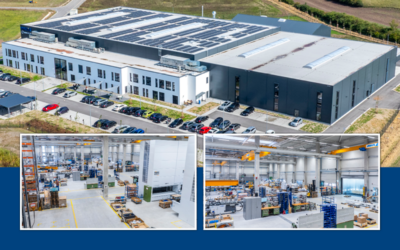
At the heart of the transformation is a holistic redesign of the process landscape. Production logic, material flows and planning mechanisms were systematically analyzed and restructured. The adjustments were implemented as part of the development of the new site and are interlinked both organizationally and infrastructurally.
Reorganization of assembly and manufacturing processes
A key factor for optimization was the systematic reorganization of assembly and manufacturing processes based on lean production principles. Whereas projects were previously launched in parallel in individual areas, order execution is now carried out in a far more sequential manner. Resources are scheduled in line with production times, bottlenecks are actively managed, and process steps are clearly delineated from one another. This structured sequencing increases process stability, reduces work-in-progress inventory and improves transparency regarding project progress. The target metric is a consistent flow of materials and information across all production stages.
Restructured intralogistics and optimized material flows
In parallel, intralogistics was fundamentally revised. Material movements between storage and production stations were replanned and spatially optimized. Based on a reference assessment, internal transport routes were reduced by around 70 percent. The new logistics structure is complemented by digitally supported storage lift systems that automatically provide picking positions in a defined sequence. Material access is system-guided, reducing search times and minimizing error rates. The result is a significantly higher level of material availability coupled with decreasing process complexity.
More granular production planning and greater transparency
Production control was also restructured. Instead of predominantly week-based planning, scheduling is now carried out at a much more granular level, down to the day-by-day structuring of individual work packages. This higher resolution enables dynamic adjustment in the event of deviations, such as technical disruptions or staffing bottlenecks. The improved transparency increases forecasting capability along the entire value chain. Planning deviations are identified earlier and can be corrected in a targeted manner.
With its newly aligned value chain architecture, UNICOR is creating the basis for consistently higher delivery performance and greater planning certainty in international project business.